The AI Assembly Line: Why "Faster" is Making Us Tired
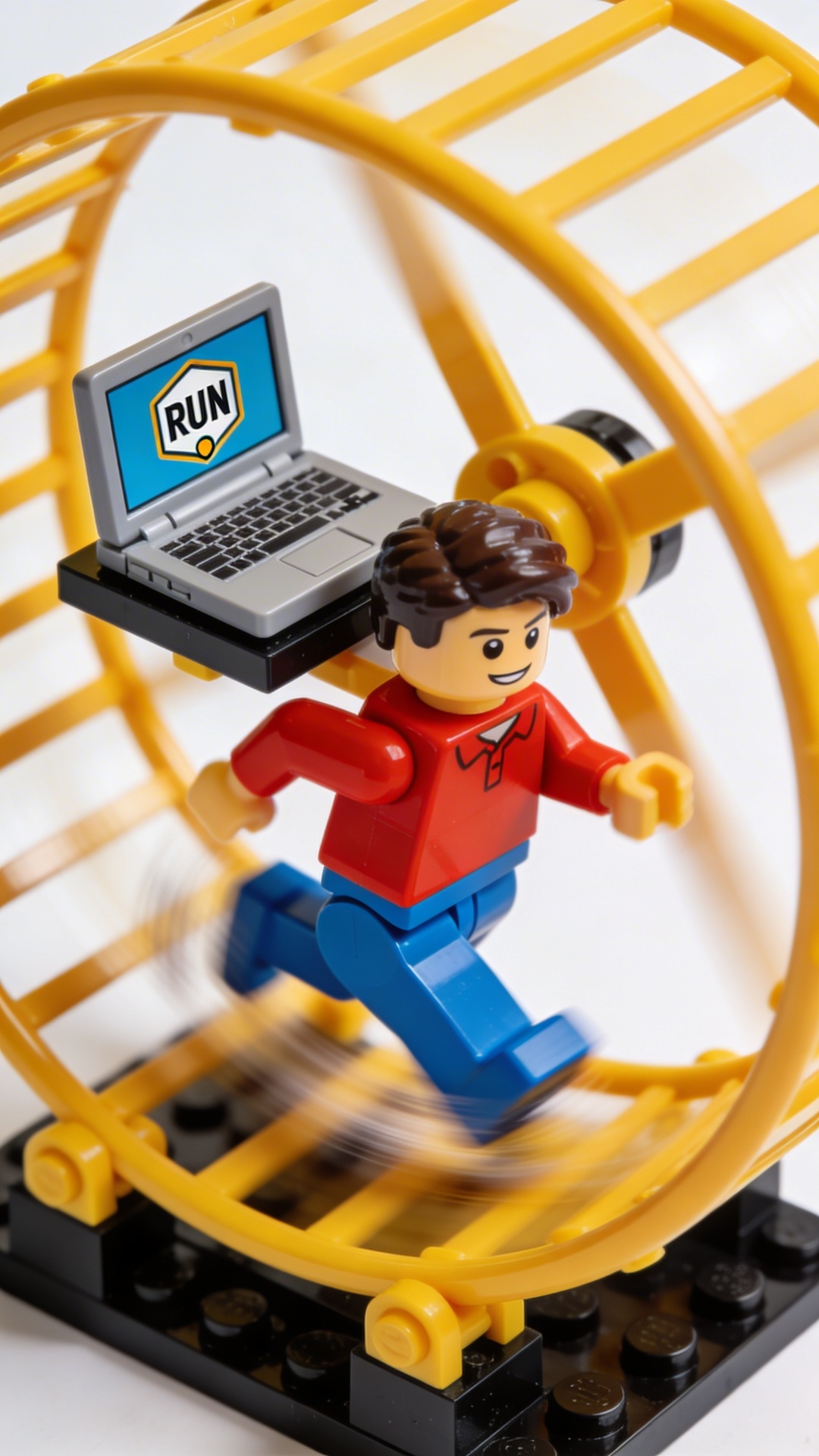
In the world of software engineering, we were promised that AI would be our "Exoskeleton"—a tool to make us stronger and faster. But for many dev teams, it's starting to feel more like an Assembly Line.
At Operal, we build AI solutions for the most high-stakes environments: Pension Funds and Banks. We believe in the tech. But we've also started to notice a shift in the "baseline" of human effort that no one is talking about.
The Jevons Paradox of Code
There is an economic principle called the Jevons Paradox. It states that as a resource becomes more efficient to use, we don't actually use less of it—we use more.
When AI makes it 3x faster to generate a pull request, we don't spend the extra time resting or thinking deep thoughts. Instead, the "void" is immediately filled with more tasks.
- The developer who used to write code now spends 8 hours a day reviewing AI-generated code.
- The "thinking" part of the job is being squeezed out by the "auditing" part of the job.
- Every line of code is now "suspect"—requiring a level of high-stakes vigilance that is mentally exhausting.
We've moved from being craftsmen to being quality-control inspectors on a conveyor belt that never stops.
Why "Graceful Degradation" Matters for Humans
In engineering, we design systems for Graceful Degradation—the ability of a system to maintain limited functionality even when portions of it break. We spend months ensuring our servers don't just "crash" under load.
Why don't we do the same for our people?
When a developer hits a wall of "AI fatigue," they don't just slow down; they start making "hallucination-level" errors. They stop caring about the architecture and start just trying to get the prompt to work. That's not a win for productivity; it's a mounting debt of technical and mental fatigue.
How We're Fighting Back
To keep our team sharp and our systems safe, we've implemented three "Human-First" guardrails:
1. AI Time-Boxing
We don't use AI in an open-ended "prompt-loop." We set a timer. If the AI hasn't solved it in 20 minutes, we go back to manual "thinking" mode to prevent brain fry.
2. Protected Morning Thinking
The first two hours of the day are for deep work—no AI assistants, no Slack, no pings. We protect the "craft" before we turn on the "assembly line."
3. Unsitting Sessions
We encourage "analogue" breaks. Stepping away from the screen isn't a luxury; it's a maintenance requirement for the most complex computer in the room: the human brain.
The Bottom Line
AI is a multiplier, but you can't multiply zero. If your developers are too exhausted to think, the most powerful AI in the world won't save your roadmap.
We build for the future of finance, but we do it by taking care of the humans in the system today.
Are you feeling the "Assembly Line" effect in your team? Let's talk about how to build a more sustainable engineering culture. Contact us at Operal.