Why One-Size-Fits-All Chatbots Lose Customers – and How Adaptive AI Changes That
The Problem: One Chatbot for Everyone – and Nobody Feels Understood
Imagine walking into a store. The salesperson greets every customer with the exact same sentence, the same tone, the same pace – regardless of whether you're in a hurry, looking for advice, or just browsing. How long do you stay?
That's exactly what most chatbots do today. They communicate in a single style – usually neutral and factual – and wonder about abandonment rates of 40–60%. Users don't feel met, don't feel understood, and click away.
The Cost of One-Size-Fits-All
The numbers tell a clear story:
- 53% of users abandon a chat when responses feel "too robotic" (Forrester, 2024).
- Every abandoned chat is a lost opportunity – in customer service, sales, and onboarding.
- Companies invest in AI chatbots but don't get a better customer experience – because technology alone doesn't build trust.
The core issue: most chatbots are optimised for efficiency, not relationship. But people make decisions based on trust – and trust comes from feeling understood.
The Solution: Adaptive Communication Based on the 4-Colour Model
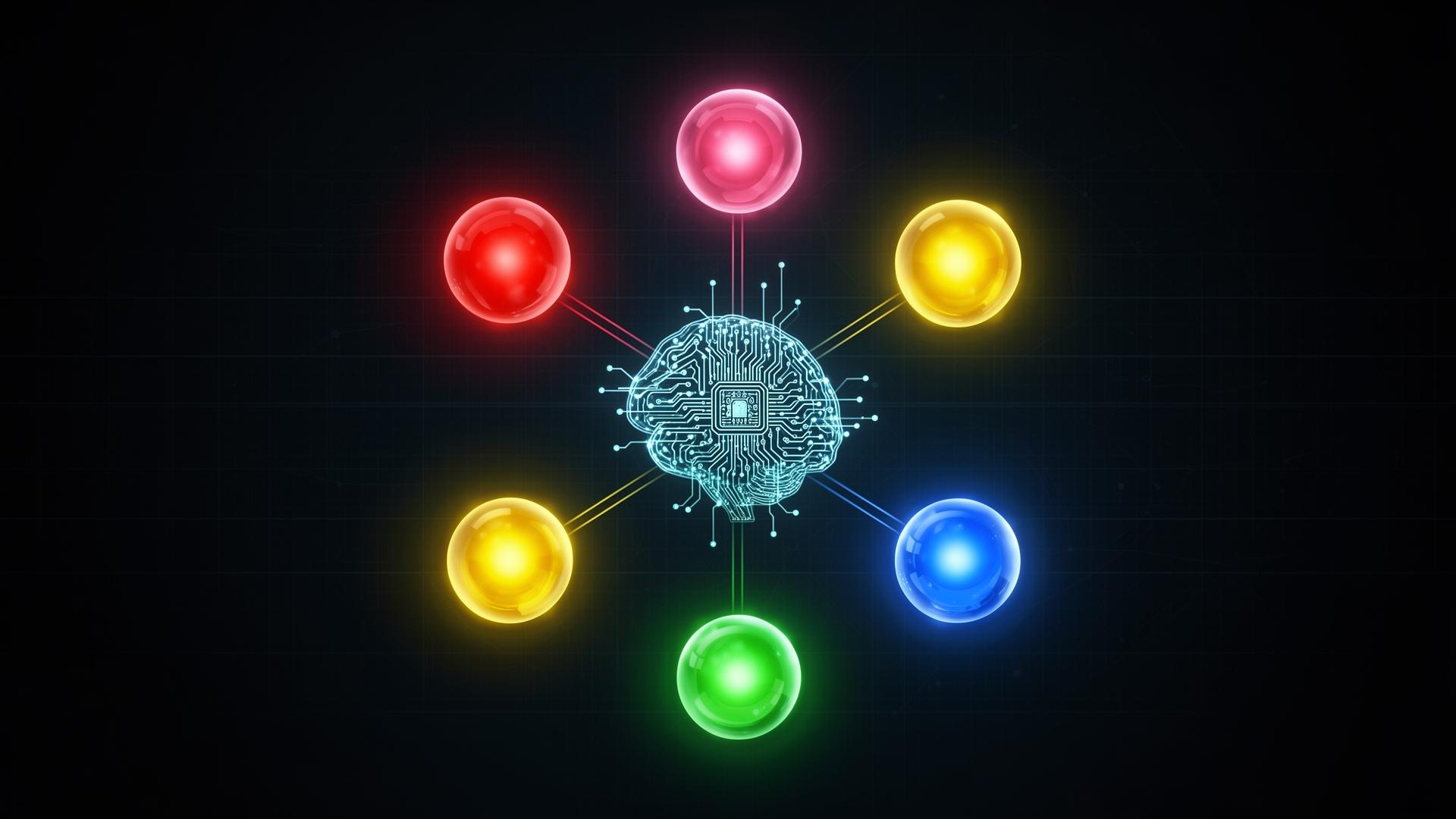
Communication psychology has had a proven model for decades: the 4-Colour Model (based on DISC/Insights). It divides communication styles into four types:
Wants results, not lengthy explanations. Direct, fast, to the point.
Seeks inspiration and personal connection. Casual, creative, emotional.
Needs security and empathy. Patient, caring, supportive.
Demands data and structure. Precise, factual, detailed.
A "red" user who wants a quick answer is put off by a verbose chatbot. A "green" user seeking reassurance feels dismissed by curt responses. The chatbot must adapt – not the human.
What the Research Says
The scientific foundation is solid. Three key findings:
1. Similarity-Attraction Paradigm
People trust counterparts who communicate similarly to them. Clifford Nass and colleagues at Stanford University showed in groundbreaking experiments that this principle also applies to computers and virtual agents (Nass et al., 2001). Users rated "personality-matched" interfaces as more competent and trustworthy.
2. Trust Through Personality Matching
Brave et al. (2005) demonstrated that virtual agents adapting their personality to the user generate significantly higher trust. This isn't a "nice-to-have" – it's a measurable business advantage.
3. Real-Time Detection Is Possible
Modern NLP models can assess a user's communication style after just a few sentences – based on sentence length, word choice, pace, and emotional tonality. The technology is mature.
How Operal Implements This
At Operal, we've built this principle into our AI chatbot platform. Our chatbots analyse the user's communication style in real time and adapt accordingly:
- For "red" users: Short, direct answers with clear calls to action.
- For "yellow" users: Vibrant, enthusiastic language with a personal touch.
- For "green" users: Empathetic, affirming communication with reassurance.
- For "blue" users: Structured, data-driven answers with sources.
The result: Higher completion rates, lower abandonment rates, and measurably more trust – in industries like pension funds, insurance, and banking, where trust is the currency.
Conclusion: The Chatbot of the Future Isn't a Monologue – It's a Mirror
The next generation of AI chatbots won't simply be "smarter." They'll be more empathetic. Not through feelings – but through the ability to recognise and mirror the communication style of the person they're talking to.
Companies that take this step transform their chatbot from a "necessary evil" into a genuine trust anchor for their brand.
Want to learn how adaptive AI communication works in your industry? Get in touch – we'll show you how Operal builds chatbots that truly listen.
Sources: Nass, C., Moon, Y., & Green, N. (2001). Are Machines Gender Neutral? Journal of Applied Social Psychology. | Brave, S., Nass, C., & Hutchinson, K. (2005). Computers that care. International Journal of Human-Computer Studies. | Forrester Research (2024). The State of Chatbots.